


EcoBlog
The latest thinking on ecological landscapes. Useful tips to improve our environment


Another Challenge to Honey Bees – You Can Help!
Backyard beekeeping has risen dramatically in the U.S. Unfortunately, in many areas there just aren’t enough nectar and pollen plants to go around to feed all the hungry honey bees. The result: starving honey bees or bees that seek out any sugary substance close at hand, in order to survive. You may have heard about the red honey that was reported in Brooklyn, NY in 2010 when honey bee colonies went “dumpster diving” in a maraschino cherry factory. Blue and green honey just appeared this past fall in Alsace, France when honey bees raided an M & M factory. This can’t be good for the bees, and it certainly can’t be good for us when we eat their honey.
In London, where beekeeping has exploded, the Secretary of the London Beekeepers Association has cautioned that there are not enough forage plants to go around. Without forage plants, honey bees starve. This is now a growing concern in U.S. cities and suburban backyards, as beekeeping becomes a popular activity, but without a commensurate increase in nectar and pollen sources.
EcoBeneficial is launching a campaign called: Feed the Bees! to raise awareness of this problem and to educate homeowners, gardeners, and beekeepers on how to garden to support honey bees and our many native bees. Even if you aren’t a beekeeper, you can help!
Stay tuned for more information.
Happy Nectaring from Kim Eierman at EcoBeneficial!
Photo: Honey Bee (Apis millifera) on Poor Man’s Patch (Mentzelia floridana)
Photo credit: Flickr/Bob Peterson
http://www.flickr.com/photos/pondapple/6929027044/in/photostream/
More from EcoBlog
Fall Planting With Woodies – Native Trees & Shrubs
Some of our most ecologically-important native plants are trees and shrubs (aka woodies). They provide critical structure and ecological function to our landscapes. Some are early pollen sources for hungry bees, some have fruits, nuts or seeds for birds and mammals, some are host plants for butterflies, some are nesting…
The Value of Signs in an Ecological Landscape
How do you communicate to your neighbors why you have little or no lawn, why you have a diversity of native plants, why your trees are not topped, why your shrubs are not pruned into meatballs, why you leave your perennials and grasses standing through winter? Many of our neighbors…
A Closer Look at Monarchs & Milkweeds: Latest Information from Xerces
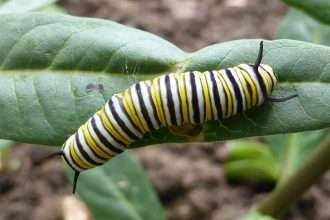
Milkweeds (Asclepias species) are getting a lot of attention these days since they are the only larval host plants for the threatened Monarch Butterfly. As you may know, butterfly caterpillars have a different diet than their adult counterparts. Most caterpillars eat plant parts, usually leaves. Monarch caterpillars only eat the…