


EcoBlog
The latest thinking on ecological landscapes. Useful tips to improve our environment


Your Favorite Native Plants: Cutleaf Coneflower
Autumn Thomas had the final winning entry to the EcoBeneficial t-shirt contest:
“I’m going to go with Cutleaf Coneflower (Rudbeckia laciniata) even though it’s a tad aggressive, I see hundreds of bees, beetles and lepidoptera (butterflies, skippers and moths) on it every year. Then, after it goes to seed flocks of goldfinches arrive!”
Wondering if Cutleaf Coneflower would be a good fit in your landscape? Take a look:
Zones: 3 to 9
Native range: Quebec to Montana, south to Florida and Arizona
Member of the Aster family (Asteraceae).
Prefers moist, slightly acidic, fertile soil in full sun to part sun (needs moister soil in full sun).
Mature plant size: 3 to 6 feet high x 3 to 4 feet wide.
Spreads by underground stems, and can be “frisky” in the garden – give it space!
It’s a great native alternative to the exotic invasive Yellow Flag Iris (Iris Pseudacorus).
Flower heads are 2 ½” to 3” across and attract many pollinating insects including: long-tongued and short-tongued bees ( including honey bees), predatory wasps, butterflies, skippers, moths, some beetles and flies.
Cutleaf Coneflower is a host plant for caterpillars of the Silvery Checkerspot butterfly and several moths.
Leave the stems and dried flower heads standing through winter to provide seeds for Goldfinches and overwintering sites for insect egg cases (Praying Mantids included!).
Plant Native! from Kim Eierman at EcoBeneficial!
Photo: Rudbeckia lacianata (Cutleaf Coneflower)
Photo credit: Wikipedia
http://en.wikipedia.org/wiki/File:Oohangousou.JPG
More from EcoBlog
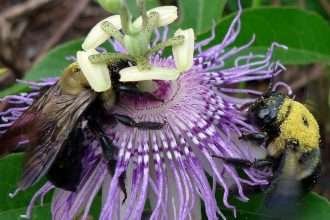
Helping Bees in Crisis: 7 Steps to Creating a Bee-Friendly Landscape
A version of this post was just published in the magazine, Westchester Home. Read below, or follow this link to the published version: http://www.westchestermagazine.com/Westchester-Magazine/Westchester-Home/Summer-2013/How-to-Grow-a-Garden-that-Fosters-Bee-Activity-and-Pollination/ Please share this post with family and friends. Knowledge is power! If we all garden this way, we can help bees in crisis. The European honey…

An Environmental Aspect to This Memorial Day
As we remember our fallen troops this Memorial Day, let’s also pay tribute to Rachel Carson, born on May 27, 1907, a famous conservationist credited with starting the modern day environmental movement. After studying at the Woods Hole Marine Biological Laboratory, and receiving a Masters in zoology from Johns Hopkins…

Your Favorite Native Plants: The Bee-licious Sourwood Tree
Our fourth winning entry to the “What’s Your Favorite Native Plant?” contest comes from Missy Isaacs: My favorite native plant is: “ Sourwood tree. Beautiful fall color, blooms in the summer, my honeybees love the pollen, and the blooms remind me of my handicapped cousin’s hands, she has the most…