


EcoBlog
The latest thinking on ecological landscapes. Useful tips to improve our environment


Helping Pollinators & Improving Ecosystems: Inspirations from the UK
Just “across the pond” in the United Kingdom, there are some inspiring initiatives going on to help pollinators and create environmental improvements. In June of this year the British Government’s Minister for Environmental Science announced that a National Pollinator Strategy will soon be created. This is the only country I know of which has placed pollinators, and their critical role in supporting ecosystems, on a national agenda. Yay Britan! It’s time for the U.S. to get on this bandwagon.
The UK’s pollinators will also benefit from the European Union ban on neonicotinoid pesticides which will kick in this December. Some parks in Greater London have already gone “pesticide-free” including Fryent County Park which has been certified “organic” by the UK Soil Association. No pesticide sprays going on there to harm insects, birds, and entire food webs.
In London, the Mayor’s Street Tree and Pocket Parks initiatives have contributed significantly to forage and habitat for pollinators and other insects. Londoners, not just insects, benefit from the beautiful plantings and the improved ecosystem services. “London in Bloom” is a non-profit campaign and competition where boroughs, communities, residents, businesses work together to “ improve the environment of London to make a greener, cleaner place to live, work and visit.”
Buglife, another UK non-profit, together with The Co-operative’s “Plan Bee” campaign are helping to create corridors, or “bee roads” of wildflowers, uninterrupted expanses of bee forage and wildlife habitat. The London Underground, an above and below ground transportation system, manages 4,000 hectares of land which function as insect highways and provide a safe haven for a huge variety of wildlife.
Beekeeping has exploded in London with a tripling of beekeepers from 2008 to 2013. The London Beekeeping Association and the organization, Friends of the Earth, have cautioned that there may not be enough forage sources to go around. Their advice: plant for pollinators whether you keep bees or not. And, if you do keep bees, become well -educated and well- informed on bee health and nutrition.
Some of the most clever initiatives to support pollinators and ecosystems are being run by The Co-operative Funeralcare which operates a number of cemeteries in the UK. They offer woodland and meadow burial grounds which focus on preserving natural environments with native plants. No headstones in these cemetaries – graves are marked by memorial trees or simple bronze plaques. So far The Co-operative has created eleven acres of wildflower meadows in cemeteries to provide pollen and nectar for bees, butterflies and moths. Now that’s a place I wouldn’t mind resting in peace!
Plant for Pollinators with Regional Native Plants!
from: Kim Eierman at EcoBeneficial!
Photo: Monarch Butterfly on New England Aster
Photo credit: US Fish and Wildlife Service
More from EcoBlog
Fall Planting With Woodies – Native Trees & Shrubs
Some of our most ecologically-important native plants are trees and shrubs (aka woodies). They provide critical structure and ecological function to our landscapes. Some are early pollen sources for hungry bees, some have fruits, nuts or seeds for birds and mammals, some are host plants for butterflies, some are nesting…
The Value of Signs in an Ecological Landscape
How do you communicate to your neighbors why you have little or no lawn, why you have a diversity of native plants, why your trees are not topped, why your shrubs are not pruned into meatballs, why you leave your perennials and grasses standing through winter? Many of our neighbors…
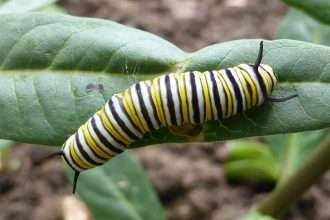
A Closer Look at Monarchs & Milkweeds: Latest Information from Xerces
Milkweeds (Asclepias species) are getting a lot of attention these days since they are the only larval host plants for the threatened Monarch Butterfly. As you may know, butterfly caterpillars have a different diet than their adult counterparts. Most caterpillars eat plant parts, usually leaves. Monarch caterpillars only eat the…