


EcoBlog
The latest thinking on ecological landscapes. Useful tips to improve our environment


Interview with Dr. Doug Tallamy, Author of Bringing Nature Home
Recently I had the pleasure of interviewing Dr. Doug Tallamy at his home. Doug is the author of Bringing Nature Home: How you Can Sustain Wildlife With Native Plants, a book which has sparked a new cycle of enthusiasm for native plants and ecological landscapes. Doug is Professor & Chair of Entomology and Wildlife Ecology at the University of Delaware, and has particular expertise in Lepidoptera (butterflies, skippers, and moths).
If you have not read Doug’s book, I hope that this interview will prompt you to buy a copy, plus a few copies as holiday gifts for your friends and family members. Bringing Nature Home is a wonderful companion to Sara Stein’s 1993 book, Noah’s Garden: Restoring the Ecology of Our Own Backyards. Both of these treasures helped open our eyes to the critical connections between our landscapes and the living creatures around us.
If you have followed my blog or heard me speak, you know that I say “every landscape matters, every plant choice matters.” Doug’s book makes that case very clearly, highlighting the food web of caterpillars, the plants that they eat, and the predators that eat them. Who knew that caterpillars could be so fascinating? You don’t have to be an entomologist to get caught up in the compelling ecological story that Doug shares.
One important fact that Doug cites in his book is: 96% of all terrestrial birds feed insects to their young. What better reason to eliminate (or at least extremely reduce) the use of pesticides in our landscapes? This single fact, by itself, has likely motivated thousands of readers to rethink the use of “secret sauce” (my lingo for pesticides). Do we really need perfect green lawns loaded with secret sauce or do we want life in our landscapes, sharing our world with songbirds and other wonderful critters?
Part 1 of my interview with Doug was taped in his backyard as we chatted about his book and his philosophy. Doug’s landscape serves as a compelling example of why we need to rethink our traditional gardening practices – there is life everywhere – under leaves, along plant stems, within the leaf litter, and so on.
Enjoy the first video, share with your friends and family, and then join me for subsequent video clips when Doug and I explore the “nooks and crannies” of his landscape, all filled with life.
Thanks for joining us!
from Kim Eierman at EcoBeneficial!
2 Comments
More from EcoBlog
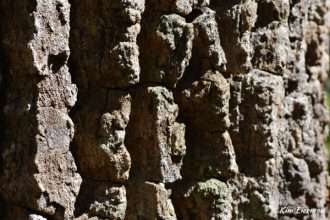
Fall Planting With Woodies – Native Trees & Shrubs
Some of our most ecologically-important native plants are trees and shrubs (aka woodies). They provide critical structure and ecological function to our landscapes. Some are early pollen sources for hungry bees, some have fruits, nuts or seeds for birds and mammals, some are host plants for butterflies, some are nesting…
The Value of Signs in an Ecological Landscape
How do you communicate to your neighbors why you have little or no lawn, why you have a diversity of native plants, why your trees are not topped, why your shrubs are not pruned into meatballs, why you leave your perennials and grasses standing through winter? Many of our neighbors…
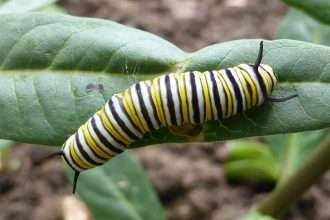
A Closer Look at Monarchs & Milkweeds: Latest Information from Xerces
Milkweeds (Asclepias species) are getting a lot of attention these days since they are the only larval host plants for the threatened Monarch Butterfly. As you may know, butterfly caterpillars have a different diet than their adult counterparts. Most caterpillars eat plant parts, usually leaves. Monarch caterpillars only eat the…
Good to include direct link to video in post above?
http://www.youtube.com/watch?v=w39g_f7BMUk
Dear Anne:
Thanks very much. I forgot to delete the arrow on the still shot! All set now. Thanks for writing in.
Best,
Kim