


EcoBlog
The latest thinking on ecological landscapes. Useful tips to improve our environment


A Bakers Dozen of EcoBeneficial Ideas for Earth Day
Give your ecosystem a gift this Earth Day with these 13 ideas that are sure to please the environment:
1) Select at least 25% of your lawn that you don’t really use. Make a commitment to turn that area into a habitat garden by the end of spring (pollinators, butterflies, birds, etc.).
2) Comb your garage and garden shed for leftover pesticides, herbicides and fungicides. Toss them (follow your municipal procedures for proper disposal).
3) Take an inventory of your trees, shrubs and perennials. Are at least 50% native to your region? If not, make a plan to get there. Do your research on www.wildflower.org/plants and local native plant society web sites.
4) Get to know the invasive non-native plants in your region. Many states have an invasive plant list, often with photos.
5) Make a plan to remove any invasive, non-native plants in your landscape. Bye, bye to Butterfly Bush, Japanese Barberry, Japanese Honeysuckle, Privet, and so on.
6) Research which butterflies are native to your area on www.butterfliesandmoths.org and make a plan to plant their preferred native host plants and nectar plants this spring.
7) Check your plantings to make sure that you have at least 3 native species in bloom for every part of the growing season to support beneficial insects, including pollinators (early spring, later spring, early summer, mid-summer, late summer, early fall, and on for warmer climates).
8) Repeat after me, “I will plant the right plant in the right place.” No cheating!
9) Instead of planting annuals this year, plan to plant native perennials, even in pots!
10) Be a role model for your neighbors, family and friends – order a “wildlife habitat” sign, a “pollinator garden” sign, a “bird habitat” sign, and/or a “pesticide-free zone” sign, etc.
11) “Walk the walk” by making sure your landscape is performing the ecological functions promoted by your sign(s) in #10 above.
12) Join a local native plant society – they don’t charge much for membership, and are a tremendous resource for information.
13) Lure the kids out into the garden this year with native edible plants – plant them, tend them, harvest them and eat them!
Happy Earth Day! From Kim Eierman at EcoBeneficial!
Photo: A “Bouquet” of Native Violets in the Smokies – host plants for Frittilary Butterflies
Photo credit: Kim Eierman
More from EcoBlog
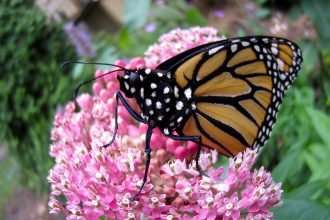
Us vs. Them? Can We Afford to Remain Disconnected from Environmental Realities?
The population of Monarch butterflies has declined to the lowest level ever recorded, pollinators are in a well-reported nose dive, the 20 most common bird species have declined by 68% in the past 45 years. What does this all mean for us humans, the one species that all other species…
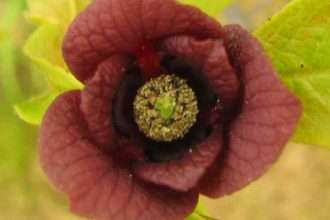
Native Edibles: The Tropical Looking Pawpaw
As the chill of winter sets in, it’s a great time to start making plans for your spring planting. Start with the structural “bones” of your landscape – native trees. In mature landscapes it may be difficult to find the space for another large tree, in that case “go small”…
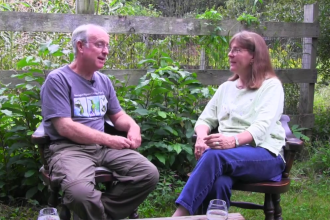
Interview with Dr. Doug Tallamy, Author of Bringing Nature Home
Recently I had the pleasure of interviewing Dr. Doug Tallamy at his home. Doug is the author of Bringing Nature Home: How you Can Sustain Wildlife With Native Plants, a book which has sparked a new cycle of enthusiasm for native plants and ecological landscapes. Doug is Professor & Chair…