


EcoBlog
The latest thinking on ecological landscapes. Useful tips to improve our environment


Honey Bee Losses for Winter 2013/2014
According to the latest survey results from the Bee Informed Partnership, honey bees fared better this past winter than the previous winter. Commercial beekeepers reported losing 23.2% of their colonies over the winter of 2013/2014 versus a loss of 30.5% for the previous winter.
This volume of loss is still not acceptable, however, with beekeepers in this survey reporting 19% as an acceptable rate of loss. Many of the hobbyist beekeepers I speak to say that even 19% is not sustainable.
Here are some simple ways you can help both honey bees and native bees, many of which are also in trouble:
– Plant a wide diversity of native plants timed to bloom throughout the growing season. Honey bees can forage on many native plants, which in turn boost your ecosystem.
– Select plants with different types of flower shapes and sizes. Bees also come in many shapes and sizes, and different bee species have different tongue lengths. Not all bees can access the same flowers.
– Emphasize flower colors that bees can see: white, purple, blue, violet, yellow. Bees see differently than we do, on a UV spectrum, and cannot see most red flowers.
– Create a “floral target” for bees, either by massing the same plant, or by repeating that plant throughout your landscape (think “meadow” or meadow-like garden).
– Skip the “secret sauce” – pesticides, which can be devastating to bees. And keep in mind that “organic” pesticides are not benign.
Download a list of bee-friendly native perennials you can include in your landscape
Check the Lady Bird Johnson Wildflower Center plant database to see which specific species are native to your region: http://www.wildflower.org/plants/
For the complete report on honey bee losses from the Bee Informed Partnership: http://beeinformed.org/2014/05/colony-loss-2013-2014/
Bee Supportive in Your Landscape! from Kim Eierman at EcoBeneficial!
Photo: Honey Bee on Echinacea
Photo credit: M/Flickr
www.flickr.com/photos/diamondflamer/6089782211/in/photolist-ah3CB4-2bQ5mq-b4e1g6-ah8Jev-ah8J62-ah6qxd-ah3D9p-ah6qWw-8Ckqot-bnpqTU-bAjigr-bAjk36-bnprT1-bnprsN-wZoTA-6x1F5Y-a2tNUR-a2wGou-2dLgBX-a2wGkm
More from EcoBlog
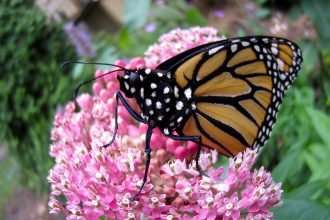
Us vs. Them? Can We Afford to Remain Disconnected from Environmental Realities?
The population of Monarch butterflies has declined to the lowest level ever recorded, pollinators are in a well-reported nose dive, the 20 most common bird species have declined by 68% in the past 45 years. What does this all mean for us humans, the one species that all other species…
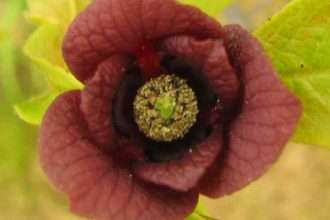
Native Edibles: The Tropical Looking Pawpaw
As the chill of winter sets in, it’s a great time to start making plans for your spring planting. Start with the structural “bones” of your landscape – native trees. In mature landscapes it may be difficult to find the space for another large tree, in that case “go small”…
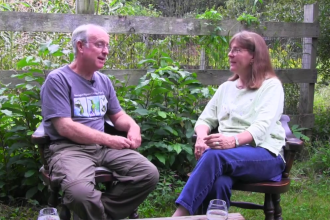
Interview with Dr. Doug Tallamy, Author of Bringing Nature Home
Recently I had the pleasure of interviewing Dr. Doug Tallamy at his home. Doug is the author of Bringing Nature Home: How you Can Sustain Wildlife With Native Plants, a book which has sparked a new cycle of enthusiasm for native plants and ecological landscapes. Doug is Professor & Chair…