


EcoBlog
The latest thinking on ecological landscapes. Useful tips to improve our environment


Another Challenge to Honey Bees – You Can Help!
Backyard beekeeping has risen dramatically in the U.S. Unfortunately, in many areas there just aren’t enough nectar and pollen plants to go around to feed all the hungry honey bees. The result: starving honey bees or bees that seek out any sugary substance close at hand, in order to survive. You may have heard about the red honey that was reported in Brooklyn, NY in 2010 when honey bee colonies went “dumpster diving” in a maraschino cherry factory. Blue and green honey just appeared this past fall in Alsace, France when honey bees raided an M & M factory. This can’t be good for the bees, and it certainly can’t be good for us when we eat their honey.
In London, where beekeeping has exploded, the Secretary of the London Beekeepers Association has cautioned that there are not enough forage plants to go around. Without forage plants, honey bees starve. This is now a growing concern in U.S. cities and suburban backyards, as beekeeping becomes a popular activity, but without a commensurate increase in nectar and pollen sources.
EcoBeneficial is launching a campaign called: Feed the Bees! to raise awareness of this problem and to educate homeowners, gardeners, and beekeepers on how to garden to support honey bees and our many native bees. Even if you aren’t a beekeeper, you can help!
Stay tuned for more information.
Happy Nectaring from Kim Eierman at EcoBeneficial!
Photo: Honey Bee (Apis millifera) on Poor Man’s Patch (Mentzelia floridana)
Photo credit: Flickr/Bob Peterson
http://www.flickr.com/photos/pondapple/6929027044/in/photostream/
More from EcoBlog
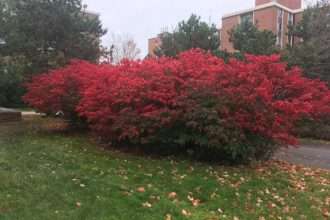
Spotlight on Invasive Plants: Burning Bush (Euonymus alatus)
At this time of year, there are some very compelling plants in the landscape, strikingly beautiful as they take on their amazing fall color. One of the loveliest to look at is Euonymus alatus, commonly known as burning bush or winged euonymus. Its foliage and unusual fruit begin to turn bright…

7 EcoBeneficial Tips for Planting Native Trees this Fall
Fall is a fantastic time to plant many trees. In most parts of the country, the warm days and cool nights of autumn favor healthy root development before winter arrives. Choosing appropriate plants and using proper planting methods are critical to your planting success and to the long-term health of…
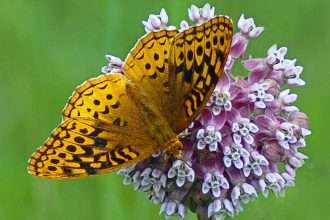
Meadowscaping: A Perfect Alternative to Lawns
You might be thinking about doing some planting this fall. Why not consider planting a native meadowscape: a meadow or a meadow-like garden? Meadowscapes are fantastic ecological alternatives to lifeless lawns (“green deserts”). Whether you have a tiny yard or an expansive landscape, you can create a native meadowscape and…