


EcoBlog
The latest thinking on ecological landscapes. Useful tips to improve our environment


Native Bees: The Forgotten 4,000
We all know the European honey bee (Apis mellifera) because of its amazing ability to produce that golden liquid, honey. But, did you realize that there are more than 4,000 species of bees which are native to the United States?
Native bees vary tremendously in size, color, habitat, nest types, how they feed their larvae, etc. Native bees also have life styles which are different than honey bees; most native bee species are solitary, although some native species (bumblebees) are social. They all have important functions as pollinators in our environment and are regarded as “keystone organisms,” which ecosystems depend upon.
Some native bees are generalists and pollinate a wide variety of plants; some are specialists and are co-dependent on certain plant species, which become extinct without these pollinators which have co-evolved with them. Before European settlers introduced honey bees in the U.S., native bees were providing all those pollination services.
Certain native plants cannot be pollinated by honey bees at all, and certain plants are much more effectively pollinated by native bees. For example, native bumble bees are the most efficient pollinators of Blueberry plants (Vaccinium). Bumble bees vibrate their wings and thorax while nectaring on blueberry flowers and those vibrations shake the pollen off the flowers’ anthers onto the bees’ bodies. This is known as “buzz pollination,” something which honey bees cannot do.
Share the love! Plant for all of our important pollinators – native bees and honey bees alike!
Here are some terrific resources for more information:
Xerces Society: www.xerces.org/
Books: Attracting Native Pollinators
The Forgotten Pollinators
Managing Alternative Pollinators
Happy Planting from Kim Eierman at EcoBeneficial!
Photo: Bumble Bee Nectaring on Blueberry Flower (Vaccinium)
Photo credit: Flickr/Bob MacInnes
www.flickr.com/photos/lonetown/3520227398/in/photostream/
More from EcoBlog
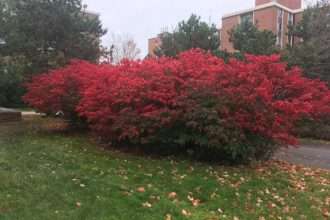
Spotlight on Invasive Plants: Burning Bush (Euonymus alatus)
At this time of year, there are some very compelling plants in the landscape, strikingly beautiful as they take on their amazing fall color. One of the loveliest to look at is Euonymus alatus, commonly known as burning bush or winged euonymus. Its foliage and unusual fruit begin to turn bright…

7 EcoBeneficial Tips for Planting Native Trees this Fall
Fall is a fantastic time to plant many trees. In most parts of the country, the warm days and cool nights of autumn favor healthy root development before winter arrives. Choosing appropriate plants and using proper planting methods are critical to your planting success and to the long-term health of…
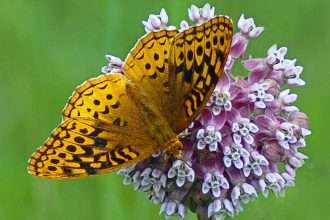
Meadowscaping: A Perfect Alternative to Lawns
You might be thinking about doing some planting this fall. Why not consider planting a native meadowscape: a meadow or a meadow-like garden? Meadowscapes are fantastic ecological alternatives to lifeless lawns (“green deserts”). Whether you have a tiny yard or an expansive landscape, you can create a native meadowscape and…