


EcoBlog
The latest thinking on ecological landscapes. Useful tips to improve our environment


Top 10 New Year’s Resolutions for the EcoBeneficial Gardener
1. Reduce or eliminate your lawn – it’s an ecological desert.
2. Focus on increasing the health of your soil – it’s filled with life! Compost is king for most soils, not fertilizer.
3. Eliminate synthetic pesticides, herbicides + fungicides. Use organic counterparts sparingly, if at all.
4. Support beneficial insects with appropriate native plantings. They are nature’s pest control.
5. Plant for a succession of bloom throughout the growing season to support native bees and honey bees. Bees are critical, keystone species.
6. Emulate nature in your garden – use local wild areas as your reference.
7. Plant the right plant in the right place. Don’t put sun-loving plants in the shade, moisture-loving plants in dry soil…
8. Remove invasive plants and replace them thickly and quickly with regional native plants.
9. Tolerate some messiness in your landscape to support wildlife. Check out all the critters living under a dead log!
10. Boost the ecosystem in your landscape by planting a diversity of regional native plants.
Best wishes for a happy and ecologically healthy 2014!
From Kim Eierman at EcoBeneficial!
Photo: Ruby-throated hummingbird nectaring on Campsis radicans (Trumpet Creeper)
Photo credit: Flickr_Kelly Colgan Azar
6 Comments
More from EcoBlog

Spring Wildflowers With Carol Gracie part 1
After a long, cold, seemingly never-ending winter, what a treat it was to go on a spring wildflower hike with author, photographer and naturalist Carol Gracie. Gracie is the author of two excellent books on wildflowers. Her first book, Wildflowers in the Field and Forest: A Field Guide to the…
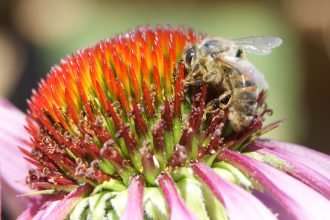
Honey Bee Losses for Winter 2013/2014
According to the latest survey results from the Bee Informed Partnership, honey bees fared better this past winter than the previous winter. Commercial beekeepers reported losing 23.2% of their colonies over the winter of 2013/2014 versus a loss of 30.5% for the previous winter. This volume of loss is still not…
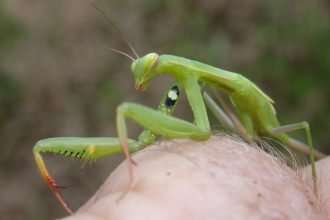
Praying Mantis Confidential
Most of us hold the Praying Mantis and other Mantises in high regard – highly beneficial insects in our landscapes, valued as voracious predators of insect pests. They are fascinating creatures that charm even those people who are squeamish about “bugs.” We have put Mantises on an “insect pedestal” wishfully…
Hello Kim –
Thank you for your continued helpful advise – I love everyone of your postings.
Happy and healthy 2014 and success with all your plantings.
Cheers –
Helga
This is a great list! Happy New Year, Kim.
Thanks Phyllis! Hope you will share the list with Bee City USA followers. What is good for bees is good for the environment!
Thanks for your support Helga! Best wishes to you for a happy and “green” new year!
Best wishes for the New Year from neighboring Tuckahoe – unfortunately i cannot keep bees- against village regulations……
I love your 10 New Years resolutions and while I already do some (lawn!!_ i shall try to do all of them in 2014.
Thanks Susanne! Good to hear that you will be adopting even more “green” resolutions. Every bit helps. Even if you can’t keep bees, you help tremendously by planting for honey bees and native bees. Happy New Year!