


EcoBlog
The latest thinking on ecological landscapes. Useful tips to improve our environment


My Brugmansia: A Native Plant Geek Goes AWOL
It started innocently enough. While volunteering at a plant sale held by Lasdon Park, a local arboretum, I spotted a dozen or so lanky, young Brugmansias for sale. The plant-loving staff, had scored these tropical wonders, offering them for sale amid a treasure trove of native and ornamental trees and shrubs. But the Brugmansias stood out, calling like a siren to every plant geek there.
Brugmansia, commonly known as Angel’s Trumpet, is a group of seven plant species native to South America. Sadly, they are listed as extinct in the wild by the IUCN. A Brug’s gargantuan blooms are sweet and seductive and it does have hallucinogenic properties. Each flower measures an extraordinary 8 to 20 inches long, filled with an evening perfume that belies the plant’s toxicity. It’s safely cultivated by many gardeners – relax and enjoy the show, just don’t eat it!
At the plant sale, the tall, skinny-girl Brugmansia trunks seemed far too weak to hold their umbrellas of over-sized tropical leaves. No blooms yet, but the promise of humungous trumpet-shaped, fragrant flowers was a compelling force – “buy me, buy me, I’m only $20.” The siren’s call was hard to resist.
The Brugmansias were snatched up like wedding dresses on sale at Filene’s Basement. Truth be told, most customers had no idea what they were buying – the Brugs just looked really intriguing. Soon there were only five Brugs left, then four, then three and then just two. Time to make a decision. For $20 apiece, these tropical show stoppers seemed a bargain too good to pass up. Could I? Would I? Should I? The conscience of a dyed-in-the-wool native plant evangelist runs deep.
I went AWOL and put pure plant satisfaction ahead of ecological value. I’m a plant geek – I couldn’t help it. I had seen Brugmansias growing in Costa Rica and was immediately seduced by their blooms. Twenty dollars and 10 years later, I had my own Brug.
After shelling out a twenty, I scrunched the five-foot exotic beast carefully into my car. Getting it out was worse – a lost leaf or two, a rip and a tear, it didn’t care, my Brug wanted to see its new home – my backyard patio, where it would soon dominate, holding court over my native perennials in containers.
Did I mention that my Brug was only $20? Hmm… It seemed so cheap at the time. In my Angel Trumpet fever, I had forgotten the demands of fussy, non-native tropical plants. Spoiled by the carefree habits of my native plants, I now answered to a demanding new master.
First purchase – a large new container to hold the Brug’s expanding roots, now outgrowing its tiny nursery pot. Next, a rolling plant caddy to move the beast around. Then, two large bags of organic potting soil to fill the voluminous new pot. And finally, organic fertilizer with a Brug-friendly N-P-K, to quell the Angel Trumpet’s constant hunger. Only the best for my Brug.
I now own a $160 Brugmansia. Payback from the natural world. You stray, you pay.
I don’t feel too badly about my exotic indulgence. The Brug’s flowers are breathtaking. Now, where the heck will I overwinter the damn thing?
From Kim Eierman at EcoBeneficial!
5 Comments
More from EcoBlog
The Value of Signs in an Ecological Landscape
How do you communicate to your neighbors why you have little or no lawn, why you have a diversity of native plants, why your trees are not topped, why your shrubs are not pruned into meatballs, why you leave your perennials and grasses standing through winter? Many of our neighbors…
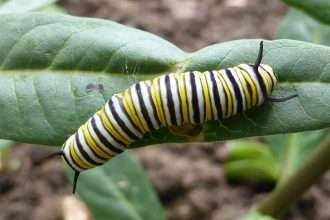
A Closer Look at Monarchs & Milkweeds: Latest Information from Xerces
Milkweeds (Asclepias species) are getting a lot of attention these days since they are the only larval host plants for the threatened Monarch Butterfly. As you may know, butterfly caterpillars have a different diet than their adult counterparts. Most caterpillars eat plant parts, usually leaves. Monarch caterpillars only eat the…
Extending the Garden With Great Native Plants in Pots
If you are like many gardeners, you are scouring your landscape to figure out where else you can squeeze in another plant. No empty spots in your garden? No problem. Containers are the answer! While many gardeners plant in pots, few realize that there are many native plants which will…
I grow Capensis radicans – much prettier, winter hardy and native.
I think you are referring to Campsis radicans (Trumpet Creeper). I grow that too! It’s a wonderful, robust native vine, attractive to hummingbirds, that can cover a fence in no time. It’s also a nectar and host plant for some Sphinx moths. We have a number of showy native vines with impressive flowers that do so much more than look good. A favorite of mine is Lonicera sempervirens (Trumpet Honeysuckle) that has an extremely long bloom time, attracts hummers and some other long-tongued pollinators, is a host plant, and provides late summer/early fall fruit for migrating birds. These important ecological functions are why I focus on regional native plants, with an occasional indulgence, like my Brugmanisa. Thank you for helping me make this point!
Hi Kim:
Just take cuttings (12-16 inches long) and put them in a lighted area in a bucket with water to overwinter. Note: Take them before frost or after a light frost. They will root and and grow shoots around Dec-Jan. In spring, after the last frost, pot them/plant them out and give the rest to friends. Easy.
Ha ha! I read with interest because I succumbed to purchasing Brugsmania Charles Grimaldi which I plan to plant in the ground at my Florida home in zone 9 because well, I am like a kid in a candy store in zone 9 although I have planted mostly native plants. I am starting him here in my NY home (in zone 4) in a pot which, of course, he is quickly outgrowing. I am so excited to see those blooms. I am usually a native plant enforcer but, like you said, those flowers are breathtaking and I am a bit obsessed! I also have a beast of trumpet vine in the backyard here in NY.
Oh, you are NOT alone! I own a pinevine elegans: https://en.wikipedia.org/wiki/Aristolochia , which…really! How on earth did that ever get to a Rural King in mid-north Indiana? Well, I love it! The first time I saw a spent bloom lying on the ground (that I hadn’t even seen open!), I thought it was something from outer space! I overwinter it inside the house & just dig a hole for its pot & set that into the ground each spring when the frost danger is past. It doesn’t bloom every year, but when it does I am totally gratified! I am always afraid that we will get a freak, early frost in the fall & I will lose it forever! And to think that I imagined I would get pipevine swallowtail butterflies to come to this! Ha! Here I am ripping out hedges & shrubs & totally GOING NATIVE!, but I dearly love this plant! : )