


EcoBlog
The latest thinking on ecological landscapes. Useful tips to improve our environment


High-Value Pollen Sources for Honey Bees: Get Planting!
For honey bees, pollen is essential for brood-rearing, and they need a lot of it: an average colony collects 50 to 125 pounds per year. Pollen is honey bees’ main source of protein, lipids, vitamins and minerals. They need pollen with 20% protein; 10 of the amino acids in pollen protein are essential to honey bee development. Not all plants provide equally nutritious pollen, or the same amount of pollen. And, honey bees do not seem to choose pollen based on its nutritional content.
How can you help honey bees get the nutritious pollen they need? Plant a variety of plants which provide pollen at different times of year. No one species can provide all nutritional needs. I suggest favoring native plants which are adapted to your region in favor of exotic plants, cultivars or hybridized plants.
Here are 10 great native woody plants which provide quality pollen:
- Willows (Salix species)
- Tulip Trees (Liriodendron tulipifera)
- Hazelnut (Corylus species)
- Maples (Acer species)
- Elms (Ulmus species)
- Ash (Fraxinus species)
- Poplars (Poplus species)
- Elderberry (Sambucus species)
- Cherry (Prunus species)
- Crabapples (Malus species)
Happy Pollen Planting from Kim Eierman at EcoBeneficial!
Photo: Honey Bee Gathering Pollen from Corylus
Photo credit: Alexandre Dulaunoy
www.flickr.com/photos/adulau/3376009550/sizes/m/in/photostream/
More from EcoBlog
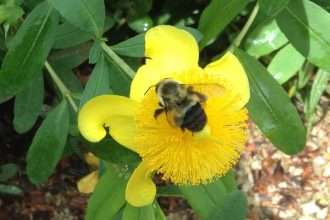
Feeding the Bees: Creating a Bee Buffet!
We are hearing more and more about the challenges which honey bees and native bees are facing. There are many things you can do in a landscape to help bees. One thing we all can do is create an appealing and nutritious “bee buffet” to help our pollinator friends. As…

Host Plants: Feeding Caterpillars = Building Butterflies
Many homeowners and landscapers don’t realize the futility of just planting exotic nectar plants to support butterflies. Caterpillars of butterflies have evolved with specific host plants on which they depend. Some caterpillars use a very limited number of native host plants, some have the ability to use a wider range…
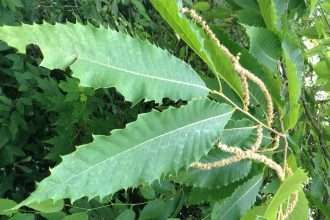
Preserving Native Species: Lessons from the American Chestnut
Prior to the year 1900 the American Chestnut tree (Castanea dentata) was the predominant tree in Eastern forests. It is estimated that there were almost 4 billion American Chestnut trees in the U.S. at the beginning of the 20th century, accounting for 1 in every 4 trees in Eastern hardwood…