


EcoBlog
The latest thinking on ecological landscapes. Useful tips to improve our environment


Multiple Duty Native Plants: The EcoBeneficial Gardener’s Secret Weapon
It’s that time of year when we start to think about spring planting. How do you choose the best plants to improve the ecosystem in your own yard? Choosing native plants which are “environmental workhorses” will not only help improve your ecosystem, but will also reward you with more birds, butterflies, beneficial insects and other critters in your yard. When considering plants, first ask:
- Is the plant native to my region, supporting the natural ecosystem?
- Is this the right plant for the site I am considering (sun level, moisture conditions, soil type, hardiness, etc.)
Then, see if this plant is an environmental workhorse:
Does the plant offer nectar and pollen for bees, beneficial insects, hummingbirds, etc?
- Does the plant produce nuts, seeds, fruit, berries, etc., providing a food source for wildlife?
- Does the plant offer a nesting site or cover for birds, or other wildlife?
- Will the plant help with erosion control and storm water runoff?
If a plant provides several of these functions, it’s a great candidate for an EcoBeneficial Garden.
Happy Planting from Kim Eierman at EcoBeneficial!
Photo: Honeybee on Common Buttonbush
Photo credit: wolfpix/Flickr
More from EcoBlog
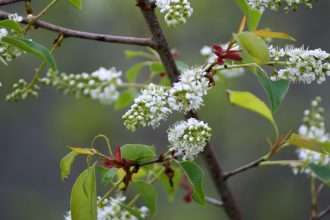
Powerful Prunus: A Visit With Dr. Doug Tallamy
Some of our most ecologically powerful native plants are the ones we never plant! It’s time for a change, if we really want to make a difference to our environment. Often considered a “weedy tree”, our native Black Cherry (Prunus serotina) is an extraordinarily valuable plant in nature. Native to…

Attracting Birds in Winter: Interview with North Coast Gardening
I recently had the pleasure of being interviewed by Genevieve Schmidt, landscape designer and well known garden writer. Genevieve is a contributing editor and staff writer for Garden Design magazine; her work has appeared in many other publications including Fine Gardening magazine and the Christian Science Monitor. Her website, North…
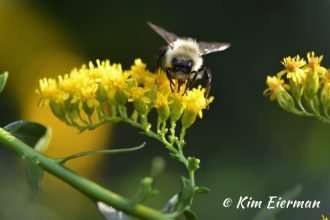
Going Pesticide-Free for Pollinators at The Farm Between
This past August, I took a road trip to one of my favorite states, Vermont, where lots of good things are happening with organic and pesticide-free landscapes and nursery production. One of my stops was “The Farm Between” in pastoral Jeffersonville, Vermont. This is one of the oldest farms in…