


EcoBlog
The latest thinking on ecological landscapes. Useful tips to improve our environment


Multiple Duty Native Plants: The EcoBeneficial Gardener’s Secret Weapon
It’s that time of year when we start to think about spring planting. How do you choose the best plants to improve the ecosystem in your own yard? Choosing native plants which are “environmental workhorses” will not only help improve your ecosystem, but will also reward you with more birds, butterflies, beneficial insects and other critters in your yard. When considering plants, first ask:
- Is the plant native to my region, supporting the natural ecosystem?
- Is this the right plant for the site I am considering (sun level, moisture conditions, soil type, hardiness, etc.)
Then, see if this plant is an environmental workhorse:
Does the plant offer nectar and pollen for bees, beneficial insects, hummingbirds, etc?
- Does the plant produce nuts, seeds, fruit, berries, etc., providing a food source for wildlife?
- Does the plant offer a nesting site or cover for birds, or other wildlife?
- Will the plant help with erosion control and storm water runoff?
If a plant provides several of these functions, it’s a great candidate for an EcoBeneficial Garden.
Happy Planting from Kim Eierman at EcoBeneficial!
Photo: Honeybee on Common Buttonbush
Photo credit: wolfpix/Flickr
More from EcoBlog
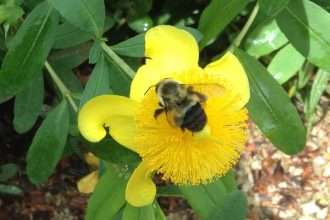
Feeding the Bees: Creating a Bee Buffet!
We are hearing more and more about the challenges which honey bees and native bees are facing. There are many things you can do in a landscape to help bees. One thing we all can do is create an appealing and nutritious “bee buffet” to help our pollinator friends. As…

Host Plants: Feeding Caterpillars = Building Butterflies
Many homeowners and landscapers don’t realize the futility of just planting exotic nectar plants to support butterflies. Caterpillars of butterflies have evolved with specific host plants on which they depend. Some caterpillars use a very limited number of native host plants, some have the ability to use a wider range…
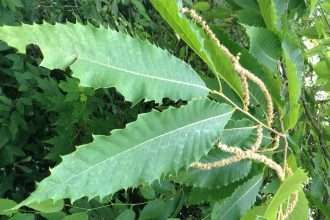
Preserving Native Species: Lessons from the American Chestnut
Prior to the year 1900 the American Chestnut tree (Castanea dentata) was the predominant tree in Eastern forests. It is estimated that there were almost 4 billion American Chestnut trees in the U.S. at the beginning of the 20th century, accounting for 1 in every 4 trees in Eastern hardwood…