


EcoBlog
The latest thinking on ecological landscapes. Useful tips to improve our environment


Native Bees: The Forgotten 4,000
We all know the European honey bee (Apis mellifera) because of its amazing ability to produce that golden liquid, honey. But, did you realize that there are more than 4,000 species of bees which are native to the United States?
Native bees vary tremendously in size, color, habitat, nest types, how they feed their larvae, etc. Native bees also have life styles which are different than honey bees; most native bee species are solitary, although some native species (bumblebees) are social. They all have important functions as pollinators in our environment and are regarded as “keystone organisms,” which ecosystems depend upon.
Some native bees are generalists and pollinate a wide variety of plants; some are specialists and are co-dependent on certain plant species, which become extinct without these pollinators which have co-evolved with them. Before European settlers introduced honey bees in the U.S., native bees were providing all those pollination services.
Certain native plants cannot be pollinated by honey bees at all, and certain plants are much more effectively pollinated by native bees. For example, native bumble bees are the most efficient pollinators of Blueberry plants (Vaccinium). Bumble bees vibrate their wings and thorax while nectaring on blueberry flowers and those vibrations shake the pollen off the flowers’ anthers onto the bees’ bodies. This is known as “buzz pollination,” something which honey bees cannot do.
Share the love! Plant for all of our important pollinators – native bees and honey bees alike!
Here are some terrific resources for more information:
Xerces Society: www.xerces.org/
Books: Attracting Native Pollinators
The Forgotten Pollinators
Managing Alternative Pollinators
Happy Planting from Kim Eierman at EcoBeneficial!
Photo: Bumble Bee Nectaring on Blueberry Flower (Vaccinium)
Photo credit: Flickr/Bob MacInnes
www.flickr.com/photos/lonetown/3520227398/in/photostream/
More from EcoBlog
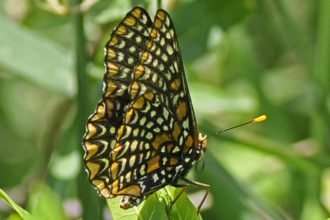
Butterfly, Butterfly: Wherefore Art Thou Butterfly?
I recently heard the celebrity Bill Maher doing a radio interview during which he confessed to having been an avid butterfly collector when he was a child. He seems quite regretful now, having killed so many butterflies and displaying them on the walls of his childhood home, with his father’s…
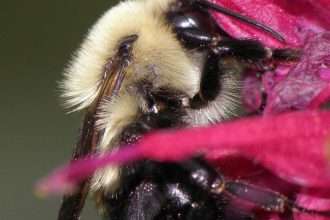
Protecting Bees: Skip the “Secret Sauce”
You may have heard about the recent bumble bee massacre in Oregon, which killed an estimated 25,000 – 50,000 bees. Shoppers at a Target store in Willsonville, Oregon found thousands of dead bumble bees in the parking lot. The likely culprit? A landscaping company which had sprayed the neonicotinoid pesticide…
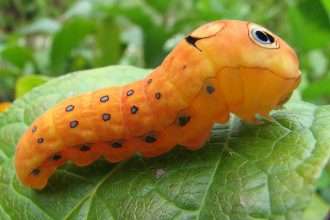
The Native Flora-Fauna Connection: The Complexity of Native Plants
I recently had the pleasure of hearing Dr. Doug Tallamy speak again. For those of you who have not yet read his book, “Bringing Nature Home,” I encourage you to rev up your Amazon account or drive to a bookstore (remember those?) and buy his book today. Tallamy is an…