


EcoBlog
The latest thinking on ecological landscapes. Useful tips to improve our environment


Your Favorite Native Plants: We Have Some Winners!
Thank you to everyone who participated in the t-shirt competition. There were many wonderful submissions and it was very hard to choose. The 5 winners are: Penny Lewis, Kay Wulf, Autumn Thomas, Missy Clark Isaacs, and Kay Davis. Starting today, I’ll share their answers on this blog.
(Winners, please email me at info@ecobeneficial.com with your mailing address, t-shirt style and size choice; t-shirt details can be found on the ebay link on www.ecobeneficial.com)
Here is Penny Lewis’ terrific and informative submission:
Senna hebecarpa (Wild Senna)
Also called Cassia hebecarpa
Of the many native plants that I have grown and love, at the top of my favorites list is wild senna. This stunning plant makes a big statement in a variety of ways yet is underutilized in the landscape. The native range for wild senna is broad, in the Eastern US from Georgia up to Canada, but habitat loss has caused this plant to be listed as “Endangered” in NH, MA, and PA.
Wild senna is in the pea family (Fabaceae) and is graced with lovely blue-green foliage similar to English peas. The pinnately compound leaves make an attractive pairing with the simple leaf forms of many inhabitants of the native garden. The next striking attribute is wild senna’s statuesque size, often reaching heights of 6-7’ (requiring no staking) and spreading to similar widths at maturity. In July and August, when the plentiful yellow blooms appear, the entire plant is abuzz with activity, as the pollen and nectar are favored by many types of bees and other insects. Wild senna provides additional habitat value as a host to many butterflies including the Clouded Sulphur and the Cloudless Sulphur. By late summer, the 4–5” seed pods provide another distinctive ornamental element as well as habitat value as a food source for some birds.
Selecting the right spot before planting wild senna is important as it is not easily moved. The root system consists of a central taproot and rhizomes which often forms vegetative colonies. Wild senna seeds do not germinate easily so this rarely becomes a problem, but if any seeds germinate where you don’t want them, they are easily weeded out the first season – or better yet, share the seedlings of this delightful native with a gardening friend.
Photo: Senna hebecarpa (Wild Senna)
Photo credit: Flickr_Lalithamba
www.flickr.com/photos/45835639@N04/4890033995/sizes/z/in/photostream/
Happy Native Planting from Kim Eierman at EcoBeneficial!
More from EcoBlog
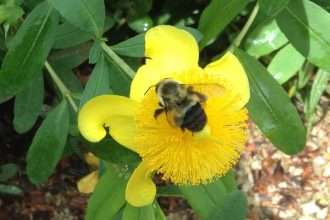
Feeding the Bees: Creating a Bee Buffet!
We are hearing more and more about the challenges which honey bees and native bees are facing. There are many things you can do in a landscape to help bees. One thing we all can do is create an appealing and nutritious “bee buffet” to help our pollinator friends. As…

Host Plants: Feeding Caterpillars = Building Butterflies
Many homeowners and landscapers don’t realize the futility of just planting exotic nectar plants to support butterflies. Caterpillars of butterflies have evolved with specific host plants on which they depend. Some caterpillars use a very limited number of native host plants, some have the ability to use a wider range…
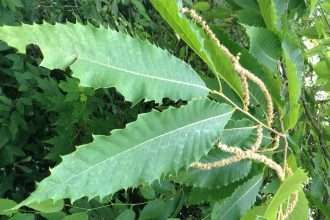
Preserving Native Species: Lessons from the American Chestnut
Prior to the year 1900 the American Chestnut tree (Castanea dentata) was the predominant tree in Eastern forests. It is estimated that there were almost 4 billion American Chestnut trees in the U.S. at the beginning of the 20th century, accounting for 1 in every 4 trees in Eastern hardwood…