


EcoBlog
The latest thinking on ecological landscapes. Useful tips to improve our environment


Protecting Bees: Skip the “Secret Sauce”
You may have heard about the recent bumble bee massacre in Oregon, which killed an estimated 25,000 – 50,000 bees. Shoppers at a Target store in Willsonville, Oregon found thousands of dead bumble bees in the parking lot. The likely culprit? A landscaping company which had sprayed the neonicotinoid pesticide “Safari “ on dozens of Linden trees in an attempt to control aphids.
The Xerces Society investigated the incident and stated that this is “the largest mass poisoning of bumble bees ever documented.” They also noted that bees die all the time in agricultural fields “where nobody sees it happen.” How ironic that it took an urban parking lot, not exactly prime bee habitat, to notice how devastating pesticides can be on pollinators.
Did I mention that the trees were sprayed while in flower? If you have ever been near a Linden tree in flower, you know how attractive they are to bees, native bees and honey bees alike. In fact, the landscaping company violated the instructions on the “Safari” label which prohibits application on plants in flower. Apparently these landscapers were also unaware that aphids are not the insect equivalent of Typhoid Mary, and could have easily been kept in check by encouraging a healthy population of lady beetles (which also perish in the face of a nasty pesticide).
The Linden trees in the Target parking lot have now been covered with netting to prevent bees from nectaring. It certainly would have been a lot cheaper to skip the pesticide and plant native plants which attract beneficial insects.
This past winter I attended a large “green industry” conference in Boston where I heard an entomologist from a major university claim that there is no solid research which supports the theory that neonicotinoid pesticides harm bees. As this speaker concluded his presentation, he slid in a quick qualifying comment that it’s best not to spray plants while in flower. I was dumbfounded. I actually earned continuing education credits by listening to that presentation; I should have lost credits for attending that lecture.
Last week was National Pollinator Week. I say that we celebrate it 365 days a year. Be an EcoBeneficial Gardener – just say no to pesticides!
Feed the Bees and Plant Some Forage (and skip the “secret sauce”)! From Kim Eierman at EcoBeneficial!
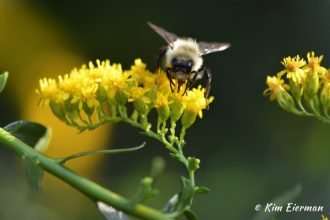
Photo: Bumble Bee
Photo credit: Flickr_UkeMatt
More from EcoBlog
The Pollinator Victory Garden: Winning the War on Pollinator Decline
You don’t have to be a gardener or a landscape professional to know that many pollinators are in trouble. The White House has taken notice and on May 19, 2015, released the “Pollinator Research Action Plan.” In the summary of the plan, three “overarching goals” are cited; unfortunately, our 4,000…
Welcoming Birds Back to the Garden this Spring
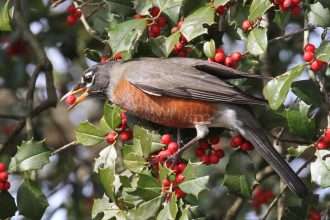
As the weather warms, neo-tropical migrating birds start to reappear in our landscapes. Are you ready to offer a proper welcome? Resources can be slim at this time of year in our landscapes, both for overwintering birds and returning migrants. Now more than ever, we need to provide welcoming habitats…
Native Bogs with Ron Determann of Atlanta Botanical Garden
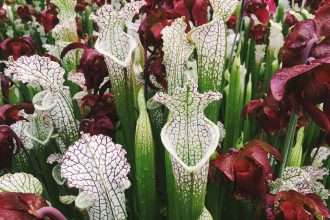
If you haven’t seen a native bog in full bloom, then make sure to put that on your bucket list. A recent trip south this fall provided me with the excuse I needed to see the splendid bog gardens at the Atlanta Botanical Garden. Both ornamental and endangered, native bogs…