


EcoBlog
The latest thinking on ecological landscapes. Useful tips to improve our environment


Dwarf Nativars – Do They Measure Up?
For those of us with small landscapes, dwarf cultivars of native plants can seem like a gift from heaven. Want to grow a particular native plant, but just don’t have the room? Have a straight species plant, like a native viburnum, that needs a pollinator partner for fruit production – but you just can’t squeeze another large viburnum in your landscape? Dwarf cultivars seem to satisfy that plant need, and for many of us – that plant lust – when we want a certain plant that we just can’t have.
But, do dwarf nativars really measure up? Maybe a version of the following story has happened to you:
You’ve planted a lovely American cranberry bush (Viburnum opulus var. americanum, formerly known as Viburnum trilobum). In May, the flowers appear, but year after year there is little to no fruit on the plant. But wait, you heard that this plant is self-fertile. After reading an EcoBeneficial blog post (the smart gardener that you are) you learn that this plant needs a genetically-different partner of the same species for cross-pollination and fruit development.
The problem is that you just don’t have enough room in your landscape for another large shrub.
While you are shopping at a garden center, you come across what appears to be the answer to your lonely viburnum’s prayers – a dwarf American cranberry bush. You scoop it up, pleased to have solved this plant partner problem. Now, you expect to see glorious, abundant fruit, providing overwintering birds in your landscape with more winter food.
Not so fast, native gardener. You have been duped!
Consider this listing from an online nursery, selling the dwarf Viburnum trilobum ‘Bailey Compact’:
“An excellent compact, rounded form of American cranberry growing 5-6′ tall and wide. Flowers and fruit are typical of the species but are sparse and should not be the primary consideration for planting.”
Here’s another online “sales pitch” for this particular nativar: “Does not flower or fruit at a young age and only lightly thereafter.”
And, this illuminating info from the Chicago Botanic Garden website: “The white flowers in May and the red fruits are only sparsely produced.”
I’m sorry, but what native gardener, or any gardener for that matter, wants an American cranberry bush that doesn’t produce plenty of flowers and fruit? Like its straight species plant counterpart, this dwarf viburnum may serve as a larval host plant to a number of moth species, and it does photosynthesize. But is that enough? Let me answer that question, from an ecological perspective – “NO!”
Plant breeders frequently produce plants that lack robust ecological functioning. In the case above, that plant may look like a native viburnum, but it certainly doesn’t function like one.
Another disappointing dwarf nativar shrub is Cornus sericea ‘Kelysei’ (aka Swida sericea ‘Kelsey’s Dwarf’). Billed as a dwarf red-osier dogwood that matures at two to three feet tall, with limited spreading, this shrub seems like a dream come true for small spaces. Consider this disclosure about the plant in the book, Dogwoods by Paul Cappiello and Don Shadow:
“The stem color is best best described as lacking, and the plant flowers sparsely if at all. Fall foliage color could be described as much. There may be somewhere on the planet that this is not the case.” The authors also note: “It is without doubt the most leaf spot susceptible of all dogwoods.” Yikes! Do your research, gardeners and landscape professional, and don’t wind up like one institution that specified and installed over 1,000 of these under-performing plants.
Don’t get me wrong – some nativars are really ecologically-useful plants. Some are not. Physocarpos opulifolius ‘Nana’ (Common Ninebark) is a fantastic dwarf cultivar that has the form, color and function of the straight species plant, but in a smaller package. Do your research and let growers, nurseries and garden centers know what you and nature really need.
Just say “no” to those dwarf nativars that are one step away from being plastic plants.
Happy gardening from Kim Eierman at EcoBeneficial!
Photo: Viburnum trilobum ‘Bailey Compact’ – a dwarf nativar without the eco-juice.
More from EcoBlog
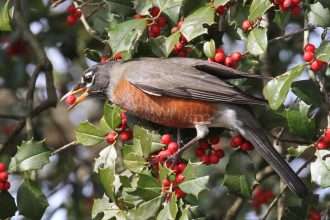
Welcoming Birds Back to the Garden this Spring
As the weather warms, neo-tropical migrating birds start to reappear in our landscapes. Are you ready to offer a proper welcome? Resources can be slim at this time of year in our landscapes, both for overwintering birds and returning migrants. Now more than ever, we need to provide welcoming habitats…
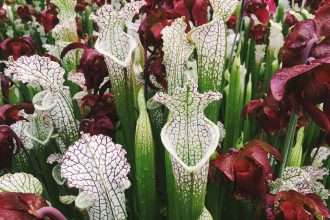
Native Bogs with Ron Determann of Atlanta Botanical Garden
If you haven’t seen a native bog in full bloom, then make sure to put that on your bucket list. A recent trip south this fall provided me with the excuse I needed to see the splendid bog gardens at the Atlanta Botanical Garden. Both ornamental and endangered, native bogs…
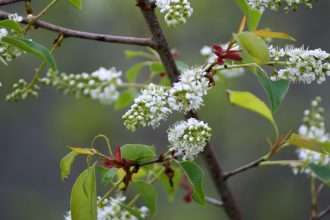
Powerful Prunus: A Visit With Dr. Doug Tallamy
Some of our most ecologically powerful native plants are the ones we never plant! It’s time for a change, if we really want to make a difference to our environment. Often considered a “weedy tree”, our native Black Cherry (Prunus serotina) is an extraordinarily valuable plant in nature. Native to…