


EcoBlog
The latest thinking on ecological landscapes. Useful tips to improve our environment


Attracting Birds in Winter: Interview with North Coast Gardening
I recently had the pleasure of being interviewed by Genevieve Schmidt, landscape designer and well known garden writer. Genevieve is a contributing editor and staff writer for Garden Design magazine; her work has appeared in many other publications including Fine Gardening magazine and the Christian Science Monitor. Her website, North Coast Gardening: Gardening in the Pacific Northwest, is full of helpful information.
Genevieve asked me some questions about how gardeners and landscape pros can attract and support birds in the winter. Below is an excerpt from the interview. Click here to read the entire interview on the North Coast Gardening website.
Excerpt of the interview:
Gen: “What long-term things can we do to provide better habitat in future years?”
Kim: Your long-term strategy should be to create a robust, bio-diverse ecosystem that supports many forms of life. We live in food webs where every living thing is connected to every other living thing. Every design choice we make and every plant we select, impacts the health of our ecosystem. And, it starts all the way down on the ground with healthy soil.
With regard to habitat, not all birds are attracted to the same layers of the landscape. Birds such as hawks prefer to be at the top of large canopy trees. Some birds, like chickadees, like to be in the midstory; other birds, such as doves, prefer understory trees and shrubs. Then there are birds that nest in the herbaceous layer, including waterfowl.
If you want to support cavity-nesting birds, like woodpeckers, it’s important to leave some standing tree snags. Just make sure that your home is not a target in the event of a tree failure. Simply cutting back a tree snag to a shorter, more tolerable height, may give you peace of mind, and a home to a cavity-nesting bird.
Our natural landscapes are usually layered, but we often forget to plant that way in our home landscapes to support varied species of wildlife. Use healthy natural areas as your reference, staying true to your region and your site. Try to transition your garden design to reflect those layers – you will be rewarded with much more bird activity if you do.
To read the entire interview, please visit the North Coast Gardening website.
From Kim Eierman at EcoBeneficial!
Photo: Cedar Waxwing and Serviceberries
Photo credit: upupa4me_Flickr
More from EcoBlog

Host Plants: Feeding Caterpillars = Building Butterflies
Many homeowners and landscapers don’t realize the futility of just planting exotic nectar plants to support butterflies. Caterpillars of butterflies have evolved with specific host plants on which they depend. Some caterpillars use a very limited number of native host plants, some have the ability to use a wider range…
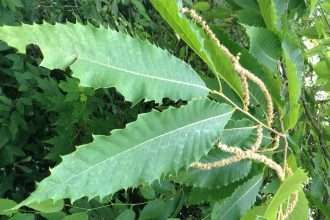
Preserving Native Species: Lessons from the American Chestnut
Prior to the year 1900 the American Chestnut tree (Castanea dentata) was the predominant tree in Eastern forests. It is estimated that there were almost 4 billion American Chestnut trees in the U.S. at the beginning of the 20th century, accounting for 1 in every 4 trees in Eastern hardwood…
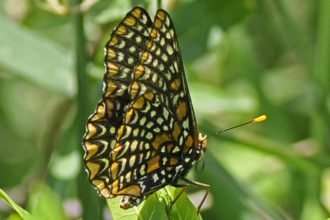
Butterfly, Butterfly: Wherefore Art Thou Butterfly?
I recently heard the celebrity Bill Maher doing a radio interview during which he confessed to having been an avid butterfly collector when he was a child. He seems quite regretful now, having killed so many butterflies and displaying them on the walls of his childhood home, with his father’s…